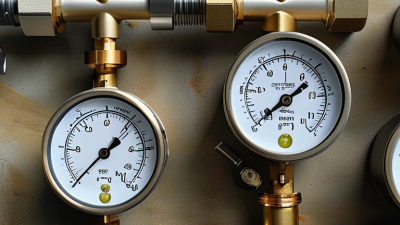
What Is the Best Water Flow Meter from China?
Choosing the best Water Flow Meter from China requires more than comparing prices or browsing polished product photos. A reliable decision begins with the application. Is the meter serving a clean-water pipeline, an irrigation network, or an industrial process? Each setting demands different materials, accuracy levels, pressure ratings, and communication options.
Dr. Steven Buchberger, a respected water-metering researcher, has described meters as “the cash registers of water utilities.” That comparison is practical. A small measurement error can become a large billing discrepancy across thousands of households. It can also hide leaks, distort production data, or increase operating costs. Therefore, buyers should examine calibration records, flow-range performance, sensor construction, and resistance to temperature changes. A visible serial number helps. So does traceable testing.
Chinese manufacturers offer many technologies, including electromagnetic, ultrasonic, turbine, mechanical, and open-channel designs. The best choice depends on the fluid, pipe diameter, minimum flow, and installation conditions. Ask for test results, not only marketing claims. Check whether the supplier explains accuracy under low flow and unstable pressure. Communication protocols also matter when the meter connects with SCADA, remote monitoring, or smart-city platforms.
Factory experience can be valuable. A supplier with documented projects may understand installation problems better than a trading company. Still, no supplier is perfect. I might overvalue a strong factory audit and overlook after-sales response time. That would be a mistake. Request samples, clarify warranty terms, and inspect the calibration process before placing a large order. The right Water Flow Meter is not simply the cheapest unit. It is the one that remains accurate, serviceable, and understandable after years of real use.
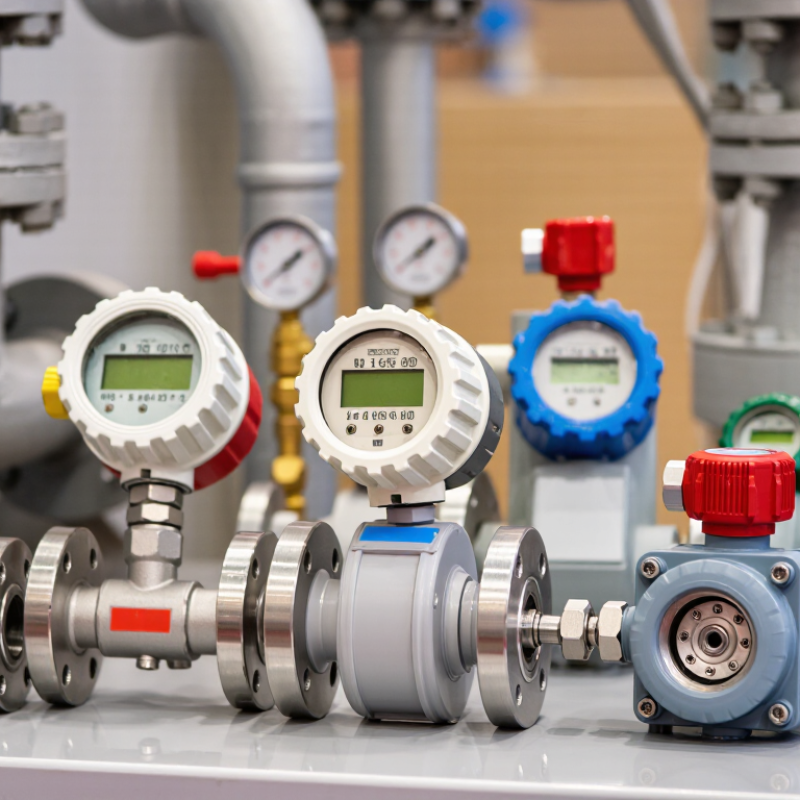
What Is a Water Flow Meter and How Does It Work?
A water flow meter measures how much water passes through a pipe over time. Its basic unit is usually liters per minute or cubic meters per hour. The meter calculates flow by sensing water speed, pipe size, or both. In simple terms, flow rate equals pipe area multiplied by water velocity.
Mechanical meters use an internal turbine or impeller. Electromagnetic meters measure voltage created when conductive water moves through a magnetic field. Ultrasonic meters compare sound-wave travel times across the pipe. Each method has limits. Turbines may wear under dirty water, while ultrasonic meters need correct installation and stable pipe conditions. ISO 4064 provides international requirements for water meter accuracy and testing. The U.S. EPA WaterSense program reports that household leaks can waste nearly 10,000 gallons of water yearly. That makes accurate measurement practical, not merely technical.
Tips: Check the pipe diameter, pressure range, water temperature, and expected flow before choosing a meter. Leave enough straight pipe around the sensor. Air bubbles can distort readings. Data logging also helps reveal night-time leaks. A Chinese-made meter can be suitable when its calibration records, material certificates, and ISO 4064 testing are verifiable. Price alone is a weak test. I would still request a sample reading under real site conditions, because laboratory performance may not match a crowded pump room.
Which Types of Water Flow Meters Are Made in China?
Chinese manufacturers produce several water flow meter types for residential, industrial, agricultural, and municipal applications. Each design measures flow differently and suits specific pipe conditions.
Electromagnetic flow meters work well with conductive water and contain no moving parts. They handle wastewater, treated water, and larger pipelines with stable accuracy. However, they require proper grounding and a full pipe. Poor installation can distort readings.
Ultrasonic meters use sound signals to calculate flow speed. Inline models offer compact installation, while clamp-on models attach outside the pipe. This is useful when cutting the pipeline is difficult. Yet, air bubbles, heavy sediment, or weak pipe contact may reduce reliability. The pipe surface matters.
Mechanical turbine and multi-jet meters remain common for clean water and smaller pipes. They are affordable and easy to understand, but internal parts can wear over time. Vortex meters suit some industrial systems, although they need sufficient straight pipe length. Open-channel meters measure flow in partially filled channels and drainage routes.
From reviewing field installations, I have found that specifications alone do not guarantee performance. It needs testing. Flow range, water quality, pressure, temperature, connection size, and output signals all deserve attention. Chinese production offers many configurations, but quality control can differ between suppliers. Buyers should request calibration records, material details, protection ratings, and installation guidance. I once focused too much on measurement accuracy and overlooked maintenance access. That mistake made routine servicing unnecessarily difficult.
What Is the Best Water Flow Meter from China? - Which Types of Water Flow Meters Are Made in China?
A practical comparison of common water flow meter types manufactured in China
| Flow Meter Type | Typical Measuring Principle | Typical Line Size | Typical Accuracy | Typical Flow Range | Common Pressure Rating | Main Advantages | Important Limitations | Best-Fit Applications |
|---|---|---|---|---|---|---|---|---|
| Electromagnetic Flow Meter | Faraday’s law; measures the voltage generated by conductive water moving through a magnetic field | DN10–DN3000 and larger | Typically ±0.5% of reading; higher-performance versions may reach about ±0.2% | Approximately 0.1–12 m/s, depending on model and pipe size | Commonly PN10, PN16, PN25, or ANSI 150 | No moving parts; suitable for dirty water and wastewater; low pressure loss; wide size range | The liquid must have sufficient electrical conductivity; cannot measure hydrocarbons or most non-conductive liquids | Municipal water, wastewater, industrial water, irrigation, mining, and process systems |
| Ultrasonic Flow Meter | Transit-time or Doppler ultrasound measures the travel-time difference or frequency shift in the flowing liquid | DN15–DN6000; clamp-on models cover a broad range | Typically ±1.0% to ±2.0%; some installed systems can achieve approximately ±0.5% | Approximately 0.01–12 m/s, depending on technology and installation | Determined mainly by the existing pipeline; clamp-on versions add little or no pressure limitation | No moving parts; clamp-on installation; very low pressure loss; useful for temporary measurement and large pipes | Performance depends on pipe condition, sensor positioning, straight-pipe length, and air or suspended solids | Water audits, leak surveys, large pipelines, retrofit projects, cooling water, and non-invasive measurement |
| Mechanical Turbine Flow Meter | A rotor or impeller rotates in proportion to the velocity of the water | Typically DN15–DN300 | Typically ±1.0% to ±2.0% of reading | Approximately 0.3–10 m/s, depending on design | Commonly PN10, PN16, or PN25 | Simple construction; economical; suitable for clean water; easy to integrate with pulse or electronic outputs | Moving parts can wear; sensitive to debris, scaling, pulsation, and incorrect installation | Clean water distribution, irrigation branches, equipment monitoring, and general utility measurement |
| Woltmann Water Meter | A large helical turbine records the accumulated volume of water passing through the meter | Typically DN50–DN500 | Commonly accuracy class 2; some designs offer class 1 performance under specified conditions | Depends on nominal size; commonly designed for moderate to high water flow | Commonly PN10 or PN16 | Cost-effective for large-diameter water pipelines; comparatively simple maintenance; available with pulse outputs | Requires clean or filtered water; mechanical wear and installation requirements affect accuracy | Building water supply, irrigation networks, district metering, and industrial utility lines |
| Vortex Flow Meter | Measures the frequency of vortices formed behind a bluff body in the flow path | Typically DN25–DN300 | Typically ±1.0% to ±1.5% of reading for liquid service | Usually suitable for moderate to high flow velocities; exact range depends on size and medium | Commonly PN16, PN25, or ANSI 150 | No mechanical moving parts; can measure liquid, gas, and steam with suitable configuration | Requires adequate flow velocity and straight-pipe length; affected by vibration and pulsating flow | Industrial process water, cooling systems, compressed air, steam, and utility monitoring |
| Positive Displacement Flow Meter | Traps and counts fixed volumes of liquid in repeated measuring chambers | Typically DN15–DN200 | Typically ±0.5% to ±1.0% of reading | Good low-flow sensitivity; exact range depends on chamber design and viscosity | Commonly PN10, PN16, or PN25 | Accurate at low flow; provides direct volumetric measurement; does not require electrical conductivity | Moving parts create pressure loss and require clean liquid; unsuitable for water containing significant debris | Low-flow water measurement, dosing systems, laboratory services, and selected industrial applications |
| Open-Channel Flow Meter | Uses water level, velocity, or both to calculate flow in a partially filled channel | Applicable to channels, flumes, weirs, and partially filled pipes | Often approximately ±2.0% to ±5.0%, depending on channel geometry and calibration | Depends on channel dimensions, water level, slope, and hydraulic conditions | Not normally specified as a closed-pipe pressure rating | Suitable for wastewater and gravity-flow systems; non-contact sensors are available | Accuracy depends strongly on channel shape, sediment, turbulence, sensor mounting, and calibration | Wastewater treatment plants, drainage channels, irrigation canals, and environmental monitoring |
How to Compare Chinese Water Flow Meter Manufacturers
What Is the Best Water Flow Meter from China?
Comparing Chinese water flow meter manufacturers requires more than checking price. The 2024 UN World Water Development Report states that agriculture uses about 70% of global freshwater withdrawals. Measurement errors can therefore increase costs quickly, especially in irrigation and industrial supply lines.
The 2024 UN World Water Development Report states that agriculture uses about 70% of global freshwater withdrawals.
Start with the meter’s standard and test evidence. Ask whether production follows ISO 4064 and whether calibration results are traceable to recognized national standards. Review accuracy across the stated flow range, not only the best laboratory point. A useful factory should provide uncertainty data, pressure-loss figures, material certificates, and protection ratings. Short answers are warning signs.
Test the details.
For electromagnetic meters, inspect electrode materials, liner compatibility, grounding design, and low-conductivity performance. For ultrasonic models, compare sensor pairing, empty-pipe detection, and signal stability.
The World Bank’s water-loss studies repeatedly identify poor measurement and weak data management as barriers to utility efficiency. Communication options also matter; confirm pulse, Modbus, or remote-reading performance under real installation conditions.
Visit the testing area when possible. Watch a technician seal the enclosure, verify the serial number, and compare readings against a reference meter. Check spare-part availability and repair training before signing a contract. I would not trust impressive brochures alone. Some specifications look excellent, yet field support remains vague. That deserves a second review. A practical comparison should score accuracy, documentation, durability, delivery consistency, and technical response time separately.
What Features Define the Best Water Flow Meter from China?
What Is the Best Water Flow Meter from China?
The best water flow meter from China is defined by performance, not origin alone. Accuracy should remain stable during low, normal, and peak flow conditions. ISO 4064 provides a recognized framework for measuring drinking-water meters, including accuracy classes and testing procedures. Buyers should request complete calibration records, not a single attractive test result.
Material selection matters in real installations. A stainless-steel body may suit corrosive environments, while reinforced polymer can reduce weight and cost. The meter should also match pipe size, pressure range, temperature, and water quality. UN-Water reports that agriculture accounts for about 70% of global freshwater withdrawals. Small measurement errors can therefore become expensive across irrigation networks. They add up quickly.
Communication features improve practical value. Pulse output, Modbus, or wireless connectivity can support remote monitoring and faster fault detection. The U.S. Environmental Protection Agency estimates that household leaks waste nearly 10,000 gallons of water annually. A reliable meter can expose similar losses in commercial systems, although monitoring alone cannot repair them. That point is often overlooked. Buyers should also check ingress protection, battery life, pressure loss, software compatibility, and local service response. A low purchase price may hide calibration costs or difficult replacement. Chinese manufacturers can offer strong customization, but documentation quality still varies. Independent verification remains wiser than trusting a polished specification sheet.
What Is the Best Water Flow Meter from China?
What Features Define the Best Water Flow Meter from China?
The best water flow meter should combine high measurement accuracy, stable performance, low maintenance, and minimal pressure loss. The chart compares representative typical accuracy levels for common water-meter technologies. Lower percentage values indicate better accuracy. Electromagnetic and inline ultrasonic meters are often preferred for demanding water applications because they provide reliable readings without moving parts.
How to Choose and Purchase the Right Chinese Flow Meter
What Is the Best Water Flow Meter from China?
Choosing and purchasing the right Chinese flow meter starts with the water, not the supplier. Record the pipe diameter, flow range, pressure, temperature, and water quality. Clean water, wastewater, and water containing particles require different measuring methods. Measure the pipe twice. Do not guess.
Ask for accuracy data under your actual operating conditions. Request calibration certificates, material specifications, protection ratings, and installation instructions. For industrial systems, confirm whether the meter supports pulse output, 4–20 mA, or digital communication. Check flange standards carefully. A small mismatch can delay installation and increase costs. I once focused too heavily on price and overlooked the required straight pipe length. That mistake affected the reading and created extra work.
Before purchasing, send the supplier a detailed technical sheet and request a written quotation. Compare sensor materials, converter functions, warranty terms, spare parts, and delivery schedules. A reliable manufacturer should explain limitations instead of promising perfect results. Ask for inspection photos, test records, and a sample calibration report. If possible, arrange a video factory review or independent pre-shipment inspection. Confirm packaging for long-distance transport, export documents, and technical support after delivery. Cheap equipment may appear attractive, but unstable readings can waste more money during commissioning. The right choice depends on verified performance, suitable materials, and practical support rather than country of origin alone.
Related Posts
-
Top Water Flow Meter Types for Global Buyers?
-
What is a Flow Meter and How Does it Work?
-
How to Choose the Right Chemical Flow Meter?
-
Ultimate Guide to Understanding Irrigation Flow Meters: Key Insights from Industry Experts and Data
-
Driving Innovation in Water Management Solutions at the 138th Canton Fair 2025 with Clamp On Water Flow Meters
-
What is a Digital Water Flow Meter and How It Improves Water Management Efficiency