How to Choose the Right Chemical Flow Meter?
Choosing the right Chemical Flow Meter is a practical engineering decision, not a simple product comparison. The correct meter must match the liquid, process conditions, and measurement objective. A device that performs well with clean water may struggle with corrosive acids, thick solvents, or liquids containing suspended particles.
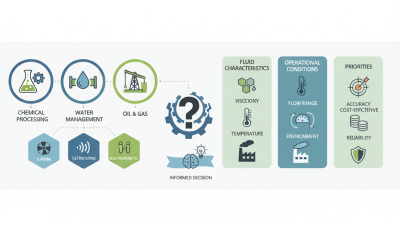
Start with the fluid itself. Record its viscosity, density, conductivity, temperature, pressure, and chemical compatibility. Then review the required flow range, accuracy, pipe size, and installation space. Electromagnetic meters suit conductive liquids and offer no moving parts, while Coriolis meters can measure mass flow with high precision. Vortex, turbine, ultrasonic, and positive displacement meters each have different strengths. The best choice depends on real operating conditions, not marketing language.
Look closely at maintenance requirements. Ask how often the meter needs calibration, whether replacement parts are available, and how easily technicians can inspect it. Confirm the manufacturer’s pressure ratings, material specifications, test methods, and documented performance data. Traceable calibration records add confidence, especially when process quality depends on stable measurement. A qualified engineer should also review grounding, straight-pipe requirements, signal output, and control-system compatibility.
No meter is perfect. A polished datasheet can still hide installation challenges. I have seen specifications change after temperature, pressure, or fluid composition changed. That is why site testing and careful commissioning matter. Leave room for uncertainty. Compare lifecycle cost, not only purchase price. A reliable Chemical Flow Meter should deliver repeatable readings, support safe operation, and remain serviceable throughout the process. The final decision should be evidence-based, reviewed by competent personnel, and documented for future operators.
Understanding Chemical Flow Meter Types and Measurement Principles
How to Choose the Right Chemical Flow Meter?
Understanding Chemical Flow Meter Types and Measurement Principles
Choosing a chemical flow meter starts with the fluid, not the pipe size. Check conductivity, viscosity, density, temperature, pressure, and suspended solids. Bubbles matter. Corrosive liquids also require wetted materials that resist chemical attack. A compatibility chart helps, but actual concentration and operating temperature can change the result.
Electromagnetic meters measure conductive liquids through voltage generated inside a magnetic field. They have no moving parts and suit many water-based chemicals. Coriolis meters measure mass flow through tube movement and vibration. They can also provide density data, but their cost and pressure drop may limit use. Ultrasonic meters measure sound-time differences and can offer non-invasive installation. However, gas pockets and poor pipe conditions can reduce accuracy. Positive displacement meters are useful for viscous fluids because they measure fixed volumes. Turbine meters may perform well with clean, low-viscosity liquids, but particles can damage their internal rotor.
In practical commissioning, installation often causes more trouble than the measuring principle. Follow required straight-run distances, remove air traps, and confirm full-pipe conditions. Grounding is important for electromagnetic meters. Keep sensors away from strong vibration and nearby electrical interference. Calibration should use the expected operating range, not only a convenient test point. Do not guess. Review the process history, sampling results, and maintenance access before choosing. No meter is perfect, and an apparently accurate reading may still hide pulsation, coating, or changing fluid properties.
How to Choose the Right Chemical Flow Meter?
Representative typical accuracy ranges help compare common flow-meter technologies. Actual performance depends on fluid properties, installation, pipe size, flow velocity, temperature, pressure, and calibration.
Coriolis meters generally provide the highest accuracy and can measure mass flow directly. Magnetic meters are well suited to conductive liquids, while ultrasonic meters offer non-invasive measurement. Vortex meters work well with clean liquids, gases, and steam. Turbine and variable-area meters are practical options when cost, simplicity, and moderate accuracy are more important than advanced diagnostics.
Identifying Process Conditions and Chemical Compatibility Requirements
How to Choose the Right Chemical Flow Meter?
Selecting a chemical flow meter starts with the process, not the pipe size. Record minimum, normal, and maximum flow rates. Also record viscosity, density, temperature, pressure, conductivity, solids, and pulsation. Small details matter. The IEA’s The Future of Petrochemicals reports that chemicals consumed about 10% of global final energy in 2017. That scale makes measurement quality an operating issue, not merely an instrumentation choice. If the meter is oversized, low-flow accuracy may suffer and control valves can hunt.
Compatibility requires more than checking whether a lining tolerates the chemical name. Review concentration, temperature, exposure time, pressure, cleaning fluid, and contamination risk. An acid may be harmless at ambient conditions but aggressive when heated or mixed. Verify wetted metals, elastomers, liners, seals, and electrode materials against the SDS and independent compatibility data. Charts can mislead. NACE’s IMPACT study estimated global corrosion costs at US$2.5 trillion annually, equal to 3.4% of global GDP. That figure supports conservative material reviews, especially around chlorides, oxidizers, and wet gas.
Match the meter principle to the fluid. Electromagnetic meters need conductive liquids. Coriolis meters handle changing density well. Differential-pressure designs require stable installation and reliable density data. Check turndown, accuracy, response time, pressure loss, and calibration methods. Field commissioning often exposes assumptions missing from the specification. A sample may be clean. Production may not be. Include startup flushing, crystallization, bubbles, and occasional empty-pipe conditions in the review. That uncomfortable testing can prevent a compatible meter from becoming an unreliable one.
Matching Meter Accuracy, Flow Range, and Installation Conditions
How to Choose the Right Chemical Flow Meter?
Matching Meter Accuracy, Flow Range, and Installation Conditions
Selecting a chemical flow meter starts with the process, not the catalog. Define the normal, minimum, and maximum flow rates. A meter sized for peak flow may read poorly during low-demand periods. A 20:1 turndown ratio can help, but only when the process remains stable.
Accuracy also needs context. A stated error of ±0.5% may apply under controlled laboratory conditions. Temperature changes, pressure variation, air bubbles, and changing viscosity can increase field error. Check whether accuracy refers to the reading or the full scale. This small detail matters. For dosing, repeatability may be more valuable than impressive maximum accuracy.
Installation conditions often decide performance. Confirm the liquid’s temperature, pressure, conductivity, viscosity, and chemical compatibility. Wetted materials must resist corrosion over long exposure, not just during a short test. Keep required straight pipe lengths available. Avoid mounting near pumps, valves, or sharp elbows when turbulence is likely. Horizontal piping may need careful orientation to prevent gas pockets. Grounding and signal cable routing also deserve attention, especially around variable-speed equipment.
During commissioning, compare the meter with a trusted reference under actual operating conditions. Record flow, temperature, pressure, and batch results. Published specifications are useful, but they are not the whole installation. In practice, a slightly less accurate meter may perform better when its range and mounting location match the process. Expect to review the choice after real production data appears.
Comparing Signal Outputs, Maintenance Needs, and Safety Features
Choosing the right chemical flow meter starts with signal output, not catalog accuracy. In plant commissioning, the control system must receive a stable, readable measurement. A 4–20 mA signal suits long cable runs and provides a useful fault indication below the live range. Digital communication can provide diagnostics, density data, and configuration details. Pulse output works well for batching, but it needs careful scaling. Do not assume one output fits every system. Check isolation, grounding, response time, and compatibility with the input card.
Maintenance needs are equally important. Corrosive liquids can attack wetted parts, seals, electrodes, or sensor linings. Confirm chemical compatibility at the actual concentration and operating temperature. A meter suitable at room temperature may fail during cleaning or winter startup. Ask how often zero checks, verification, and seal replacement are required. Keep clear access around the meter. It sounds obvious, yet crowded pipe racks make inspections unsafe. Removable sections and visible status indicators can reduce downtime, although they may increase purchase cost.
Safety features deserve a practical review. Select suitable pressure and temperature ratings, leak-resistant connections, and certified construction for the installation area. Use grounding and bonding where static discharge is possible. A local display should remain readable without exposing workers to splash zones. Remote diagnostics can reduce unnecessary entry into hazardous areas. A specification review can miss maintenance access; the instrument may meet its data sheet, while an isolation valve remains difficult to reach. Verify alarms, fail-safe behavior, and shutdown interfaces with qualified personnel. Keep calibration results, material certificates, and inspection dates in the maintenance record.