Top China Turbine Flow Meter Manufacturers for Global Buyers
Choosing among Top China Turbine Flow Meter Manufacturers for Global Buyers requires more than comparing prices. It requires evidence, application experience, and disciplined supplier verification. Fortune Business Insights valued the global flow meter market at USD 8.21 billion in 2023. It projects continued growth through 2032, supported by energy, water treatment, chemical processing, and manufacturing demand. MarketsandMarkets also identifies industrial automation and process monitoring as major market drivers.
A Turbine Flow Meter can deliver excellent repeatability in clean, stable fluids. However, suspended solids, sudden pressure changes, and poor upstream piping can reduce accuracy. Small details matter. A damaged bearing can distort readings. A short straight pipe may create an invisible measurement error. Jesse Yoder, Ph.D., president of Flow Research, has stated, “There is no one flowmeter that is best for all applications.” That practical warning remains highly relevant for international buyers.
This guide examines leading Chinese manufacturers through technical documentation, calibration capability, export experience, customization, and after-sales support. It also considers compliance with standards such as ISO 9951, API measurement practices, and ISO/IEC 17025 calibration principles where applicable. Factory audits, traceable test certificates, material records, and sample inspection deserve serious attention. A polished website proves little.
Some suppliers may offer impressive specifications but limited field evidence. That weakness should not be ignored. Buyers should request flow-range data, pressure-loss curves, communication protocols, and verified case studies. The best manufacturer is not always the cheapest. It is the supplier that can explain performance clearly, admit limitations, and support the meter after installation.
Turbine Flow Meters: Principles, Types, and Key Applications
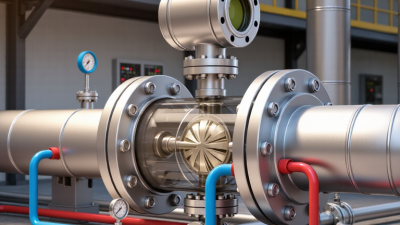
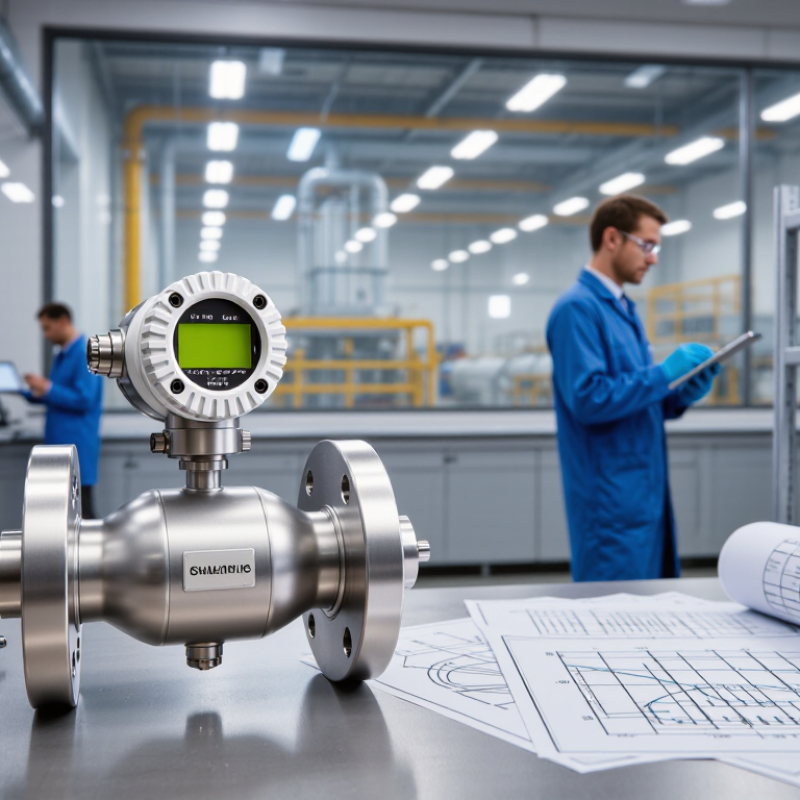
A turbine flow meter measures liquid or gas velocity through a bladed rotor. As fluid moves, the rotor spins inside the flow tube. Each rotation creates a pulse, which the electronics convert into volumetric flow. Calibration remains essential because viscosity, density, and pipe geometry can change the result.
Common designs include inline, insertion, and sanitary turbine meters. Inline units suit clean liquids in process pipelines. Insertion models help monitor large pipes without removing sections. Sanitary versions support hygienic applications, including beverage and pharmaceutical production.
They need stable flow conditions, suitable straight-pipe lengths, and protection from solid particles. Not every installation behaves perfectly.
The MarketsandMarkets Flow Meters Market report projects the sector to reach about USD 9.7 billion by 2028, with process industries driving demand. The U.S. Energy Information Administration reported that natural gas supplied roughly 40% of U.S. electricity generation in 2023, supporting continued interest in reliable gas measurement. The UN World Water Development Report 2024 states that agriculture represents about 70% of global freshwater withdrawals. This makes accurate irrigation and water-treatment measurement increasingly practical.
For global buyers, material compatibility, pressure rating, pulse stability, and calibration documentation deserve close review. A low purchase price can become expensive when sensors drift or maintenance access is poor. I would also question any datasheet that hides accuracy conditions. Turbine meters are precise, but only within their operating envelope.
How to Evaluate China-Based Turbine Flow Meter Manufacturers
Top China Turbine Flow Meter Manufacturers for Global Buyers
How to Evaluate China-Based Turbine Flow Meter Manufacturers
Evaluating a China-based turbine flow meter manufacturer requires more than comparing prices. Check the factory’s production records, calibration process, and inspection controls. A reliable supplier should provide traceable calibration certificates, material specifications, and clear accuracy data. Ask how each meter is tested across its stated flow range. A polished catalog is not enough.
Review the turbine’s internal materials carefully. Stainless steel bodies suit many industrial applications, while bearing design affects service life and measurement stability. Confirm compatibility with your fluid, pressure, temperature, pipe size, and expected flow rate. Request sample reports showing repeatability, start-up flow, and pulse output performance. Small details matter.
Visit the factory remotely or in person when possible. Look for organized assembly areas, calibrated testing equipment, and documented quality procedures. Verify whether the manufacturer supports communication options such as pulse, 4–20 mA, or digital protocols. Ask about spare parts, technical training, warranty handling, and realistic lead times. Get these points in writing.
One common mistake is trusting the lowest quotation. It may exclude calibration, connectors, or export packaging. Another mistake is testing only one sample. A better approach uses several meters from different production batches. Request customer references in similar industries, but review them critically. Even experienced buyers can overlook installation conditions, and that oversight can distort accurate meter performance.
How to Evaluate China-Based Turbine Flow Meter Manufacturers
This reference scorecard uses a 100-point procurement framework for global buyers. Technical performance, calibration traceability, quality management, customization capability, documentation, and after-sales support are key evaluation dimensions. Buyers should verify each criterion through certificates, test reports, sample inspections, and contractual quality requirements.
Leading Chinese Manufacturers and Their Product Capabilities
China’s turbine flow meter sector now serves water treatment, process chemicals, energy, and industrial automation. MarketsandMarkets estimates the global flow meter market could grow from about USD 8.2 billion in 2024 to USD 10.4 billion by 2029. This growth raises expectations for Chinese suppliers.
Leading manufacturers typically offer stainless-steel and aluminum bodies, threaded or flanged connections, and pulse, 4–20 mA, or digital outputs. Many factories also provide compact meters for clean water and larger units for petroleum transfer lines.
Some production lines support custom pressure ratings, temperature ranges, and lining materials. Calibration matters. Buyers should request test records linked to traceable reference instruments.
According to Grand View Research, industrial automation and process monitoring remain major flow meter growth drivers through 2030. Chinese suppliers increasingly respond with local machining, electronic assembly, and software integration. Their stronger capabilities include batch production, rapid spare-part supply, and application-specific engineering. However, documentation quality still varies between manufacturers. A capable exporter should provide accuracy curves, installation limits, material certificates, and verification procedures. Purchasers should also check compliance with ISO 9951 and relevant regional requirements before shipment. A polished catalog is not enough. On-site validation may still reveal pressure-loss, vibration, or low-flow problems.
Quality Standards, Customization, and Export Support
For global buyers, a turbine flow meter supplier must offer more than a competitive quotation. Grand View Research estimated the global flow meter market at about USD 8.3 billion in 2023, with continued growth through 2030. That expansion increases the need for dependable measurement, not merely larger production capacity. Buyers should request calibration certificates, test records, and traceability to an ISO/IEC 17025-accredited laboratory. Check the actual operating range, fluid viscosity, pressure loss, and temperature limits. A clean stainless-steel meter may still fail in a pulsating process line.
Customization should be practical and documented. Suppliers may adjust flange standards, pulse outputs, communication interfaces, rotor materials, and display languages. Export support also matters. Reliable manufacturers provide packing lists, commercial invoices, certificates of origin, manuals, and clear installation drawings. The International Trade Centre highlights documentation accuracy as a key factor in reducing cross-border shipping friction. Small errors can delay a complete shipment.
Field experience exposes the weak points. A meter calibrated with water may perform differently with a thicker liquid. That detail is easy to overlook. Ask for application data, not generic accuracy claims. Export teams should also explain spare-parts availability, warranty handling, and remote troubleshooting. No supplier gets every project perfect. Buyers should compare verified evidence, because polished brochures cannot replace stable test results.
Top China Turbine Flow Meter Manufacturers for Global Buyers - Quality Standards, Customization, and Export Support
A practical comparison of commonly available specifications, quality references, customization options, and export documentation.
| Evaluation Dimension | Typical Market Specification | Quality or Compliance Reference | Common Customization Options | Export Support Evidence to Request |
|---|---|---|---|---|
| Measurement Medium | Clean water, treated water, light oils, fuels, and other low-viscosity liquids compatible with the wetted materials. | Material compatibility review; fluid density, viscosity, conductivity, and cleanliness should be confirmed before selection. | Wetted-part materials, seal materials, viscosity compensation, and special internal coatings where technically suitable. | A completed technical data sheet showing the intended medium, operating viscosity, temperature, and pressure. |
| Nominal Diameter | Commonly available sizes range from approximately DN15 to DN300, depending on the meter design and flow range. | Sizing should be based on minimum, normal, and maximum flow rather than pipe diameter alone. | Threaded, flanged, wafer, sanitary, and other connection configurations may be specified by project. | Dimension drawings, face-to-face measurements, flange details, and connection standards. |
| Accuracy | Typical liquid turbine flow meter accuracy is about ±0.5% of reading for selected models; some economical models are rated around ±1.0% of full scale. | Accuracy depends on calibration, flow profile, viscosity, installation, and operating range; the exact error statement must appear on the datasheet. | Factory calibration points, expanded calibration reports, pulse-factor adjustment, and application-specific accuracy targets. | Calibration certificate with test medium, flow points, reference equipment, uncertainty, and traceability information. |
| Flow Range and Turndown | A typical turndown ratio is approximately 10:1, although the usable range varies with viscosity, pressure, and meter size. | The minimum start flow, continuous operating range, and maximum flow should be stated separately. | Different rotor designs, pulse resolution, display scaling, and flow-range optimization for a specific liquid. | Flow-range chart, pressure-loss curve, and recommended straight-pipe installation requirements. |
| Pressure and Temperature | Many industrial models are offered for pressures from vacuum or low pressure up to approximately 1.6–4.0 MPa, with liquid temperatures commonly around −20°C to +120°C. | Pressure and temperature limits are model-specific and must include the body, rotor, seals, and connection rating. | High-pressure bodies, high-temperature construction, cryogenic options, and special gasket materials where available. | Pressure-temperature rating table, hydrostatic test information, and seal-material declaration. |
| Wetted Materials | Common choices include stainless steel, aluminum alloy, engineering plastics, ceramic bearings, and fluoropolymer or elastomer seals. | 316 or 316L stainless steel is frequently selected for corrosion resistance, but compatibility must be checked against the actual fluid. | 316L body, special rotor material, low-temperature seals, food-contact materials, or chemically resistant components. | Material certificates, seal specification, surface-finish information, and corrosion-compatibility statement. |
| Output and Communication | Pulse, frequency, 4–20 mA, alarm relay, and local display outputs are commonly available; digital communication depends on the electronics package. | Signal type, pulse factor, load resistance, power supply, isolation, and electromagnetic compatibility should be documented. | Battery-powered display, programmable totalizer, remote transmitter, alarm settings, and selected industrial communication protocols. | Wiring diagram, protocol manual, parameter list, sample configuration, and electrical test record. |
| Ingress Protection | Outdoor-capable electronic enclosures are often offered with IP65 or IP66 protection; higher ratings require model-specific verification. | IEC 60529 is the recognized reference for IP enclosure ratings. | Cable glands, connector types, display orientation, sunshades, and corrosion-resistant enclosure finishes. | Declared IP rating, enclosure test report where required, and installation instructions for cable entries. |
| Calibration and Testing | Water-bench calibration is widely used for liquid meters; higher-control applications may require traceable reference instruments. | Calibration procedures should identify reference equipment, test points, uncertainty, and acceptance criteria. | Witness testing, sampling plans, additional calibration points, and customer-specific inspection checklists. | Calibration certificate, inspection report, pressure test record, material certificate, and final test checklist. |
| Quality Management | Industrial suppliers commonly operate documented quality-control procedures covering incoming materials, machining, assembly, calibration, and final inspection. | ISO 9001 certification may be requested, but certificate scope, validity, and issuing body should be verified independently. | Inspection and test plans, batch traceability, serial-number management, and third-party inspection. | Current quality certificate, factory audit documents, nonconformance procedure, and product traceability records. |
| Regulatory and EMC Documentation | Electronic versions may require documentation for electrical safety, electromagnetic compatibility, and market-specific conformity. | Applicable references can include IEC 61010-1 for measurement equipment safety and IEC 61326-1 for EMC, subject to product design and destination-market requirements. | Power supply configuration, regional plug or cable requirements, labeling language, and destination-market documentation. | Declaration of conformity, test reports, user manual, rating label artwork, and country-specific compliance package. |
| Installation Requirements | Straight-pipe requirements commonly include several pipe diameters upstream and one to three diameters downstream, depending on the meter design and flow disturbance. | Actual requirements must follow the model manual; valves, pumps, elbows, reducers, and air entrainment can affect accuracy. | Integral strainers, flow conditioners, remote mounting, and orientation-specific installation accessories. | Installation drawing, recommended piping layout, grounding instructions, and commissioning checklist. |
| Export Packaging | Export orders commonly use moisture protection, shock-resistant cushioning, sealed accessories, and reinforced cartons or wooden cases according to size. | Packaging should protect calibration stability, connectors, displays, flanges, and machined sealing surfaces during multimodal transport. | Neutral labeling, palletization, barcode labels, split packing, spare-part kits, and customized packing lists. | Commercial invoice, packing list, certificate of origin when required, insurance information, and transport marks. |
| After-Sales and Spare Parts | Typical support includes manuals, wiring assistance, parameter guidance, replacement seals, sensors, rotors, displays, and electronic modules. | Service quality is best assessed through response commitments, spare-part identification, warranty terms, and documented troubleshooting procedures. | Extended warranty, spare-parts packages, remote commissioning, training, and service documentation in the buyer’s language. | Warranty statement, spare-parts list, recommended maintenance schedule, service contact details, and remote-support process. |
A Global Buyer’s Guide to Comparing Suppliers and Placing Orders
Choosing a China-based turbine flow meter supplier requires more than comparing unit prices. The 2024 MarketsandMarkets Flow Meters Market report projects steady global growth through 2028, driven by water treatment, energy, and process industries. That demand attracts many exporters. It also creates uneven quality.
Ask each supplier for accuracy tolerance, repeatability, pressure rating, wetted-material details, and calibration conditions. A reliable quotation should state the medium, viscosity range, temperature, connection size, pulse output, and communication protocol. Request a current calibration certificate with traceability to recognized national or international standards. ISO 9951 is relevant for turbine meters used in gas measurement. For liquid applications, confirm whether the test medium matches your process.
Small details matter. Check the rotor material, bearing design, flow straightener, and minimum start-up flow. Request drawings before ordering. Confirm whether the quoted price includes customs documents, protective packaging, spare sensors, and remote commissioning support. Payment terms should match inspection milestones, not only shipment dates. A pre-shipment test video helps, but it is not a substitute for independent inspection.
No comparison is perfectly clean. A low price may reflect thinner documentation, not better efficiency. Conversely, a high price does not guarantee stable calibration. I would score suppliers across technical evidence, production experience, response speed, warranty wording, and total landed cost. The International Trade Centre and UN Comtrade provide useful trade context, but shipment statistics cannot prove meter accuracy. Start with one pilot order. Measure actual performance before scaling.
Related Posts
-
How to Choose the Right Turbine Meter in 2026?
-
How to Use a Turbine Meter for Accurate Flow Measurement?
-
2026 Best Turbine Meter Models for Accurate Flow Measurement?
-
Understanding the Mechanisms Behind Turbine Flow Meters
-

What is the Working Principle of a Turbine Flow Meter
-

Top 10 Electromagnetic Flow Meters at Canton Fair 2026?