
China Top 10 Irrigation Flow Meter Manufacturers?
Choosing an Irrigation Flow Meter from China requires more than comparing prices or counting product models. Agricultural systems face changing flow rates, muddy water, pressure fluctuations, and demanding outdoor conditions. A suitable meter should provide stable readings, clear installation guidance, and practical maintenance support.
This introduction presents a focused review of China’s leading Irrigation Flow Meter manufacturers. The evaluation considers manufacturing experience, measurement technology, calibration practices, material quality, export capability, and after-sales service. It also examines electromagnetic, ultrasonic, turbine, and mechanical meter options. Pipe diameter, water quality, power supply, communication protocols, and required accuracy can strongly influence the final choice. Small details matter. A poorly positioned sensor may produce unreliable readings, even when the meter itself is well designed.
The ranking should not be treated as permanent or universally objective. A supplier serving large farms may not suit a greenhouse project or a municipal irrigation network. Product catalogs can look impressive, but field references and test documentation deserve closer attention. This guide therefore encourages readers to verify certificates, calibration records, warranty terms, response times, and local technical support before purchasing. Some comparisons may remain imperfect because company data, regional pricing, and product availability change over time. That limitation is worth acknowledging. Reliable decisions come from matching proven equipment with real operating conditions, not from selecting a famous name alone. Each manufacturer profile will highlight practical strengths, possible weaknesses, and questions buyers should ask before signing an order.
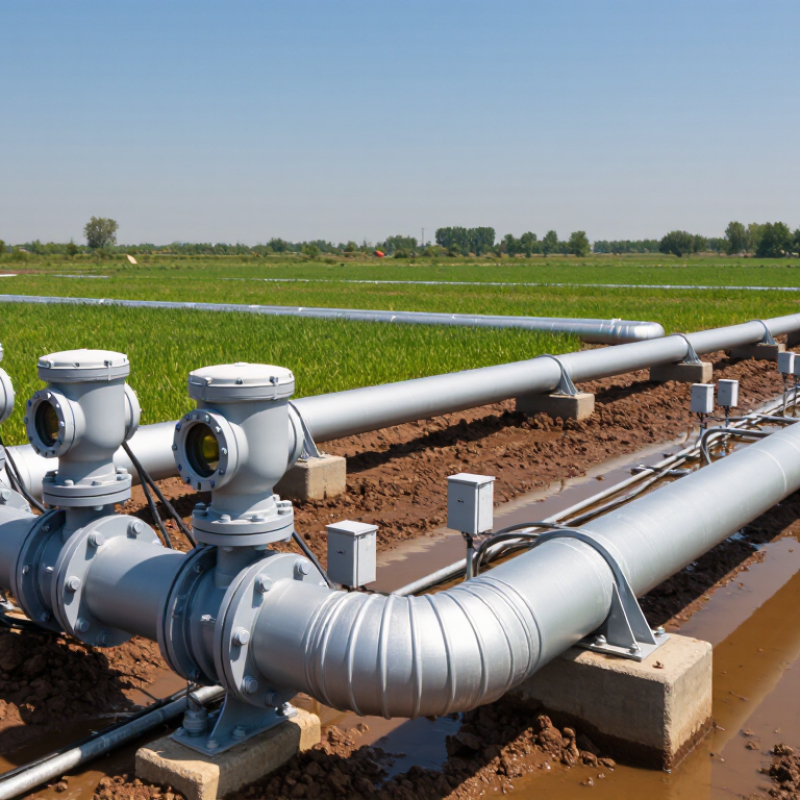
What Irrigation Flow Meters Are and Why They Matter
An irrigation flow meter measures how much water passes through a pipe and how quickly it moves. It turns invisible water use into practical field data. In an orchard, the reading can expose a leaking valve, blocked filter, or weak pump. A pressure gauge cannot confirm delivered volume. That difference matters. Accurate measurement helps growers protect crops, control pumping costs, and avoid wasting limited water resources.
Flow meters serve different irrigation conditions. Electromagnetic models suit conductive water and have no moving parts. Mechanical meters can be practical for cleaner water and simpler systems. Ultrasonic meters may help where maintenance access is difficult. Correct sizing is essential. An oversized meter may miss low flows, while a narrow meter can create unnecessary pressure loss. Installation also needs straight pipe sections, stable wiring, and protection from air pockets. Small errors grow.
When comparing Chinese irrigation flow meter manufacturers, buyers should examine calibration records, material compatibility, testing procedures, and technical support. Clear communication matters during installation. No meter is perfect. Field readings can drift when sediment builds up or sensors are poorly positioned. I have seen systems report impressive numbers that failed basic tank-volume checks. That lesson is easy to overlook. Regular inspection, cleaning, and comparison with actual water delivery keep the data useful.
| No. | Generic Meter Configuration | Measurement Principle | Typical Nominal Sizes | Typical Accuracy | Typical Flow Range | Pressure Loss | Power Requirement | Best Irrigation Application | Key Selection Consideration |
|---|---|---|---|---|---|---|---|---|---|
| 1 | Woltmann Turbine Meter | Mechanical turbine rotation proportional to water velocity | DN50–DN300 | Typically ±2% of reading | Approximately 3–1,500 m³/h, depending on size | Low to moderate; commonly about 0.1–0.5 bar at rated flow | None for mechanical display; optional battery pulse output | Large agricultural mains and pump discharge lines | Requires a reasonably clean flow and correct upstream straight-pipe installation |
| 2 | Volumetric Mechanical Meter | Measures fixed volumes using a rotating piston or disc | DN15–DN50 | Typically ±2% of reading | Approximately 0.03–40 m³/h | Moderate, increasing as flow approaches the upper limit | None for mechanical display | Small irrigation zones, greenhouses, and fertigation branches | Useful for low flows, but filtration is important to prevent jamming |
| 3 | Electromagnetic Flow Meter | Faraday’s law of electromagnetic induction | DN25–DN600 | Typically ±0.5% to ±1% of reading | Approximately 0.5–8,000 m³/h, depending on diameter and velocity | Very low because the bore has no moving parts | Usually 12–36 VDC, 85–265 VAC, or replaceable battery versions | Dirty water, recycled water, open-pump systems, and large pipelines | Water must have sufficient electrical conductivity; empty-pipe detection is recommended |
| 4 | Ultrasonic Transit-Time Meter | Difference in ultrasonic travel time between upstream and downstream signals | DN25–DN1,000 or larger | Typically ±1% to ±2% of reading | Approximately 0.1–10,000 m³/h, depending on pipe size and installation | Negligible because sensors are mounted outside or flush with the pipe wall | Battery, 12–36 VDC, or AC power depending on transmitter type | Temporary surveys, retrofit installations, and clean-to-moderately clean water | Needs a full pipe, suitable acoustic conditions, and accurate pipe data during setup |
| 5 | Ultrasonic Doppler Meter | Frequency shift caused by particles or bubbles carried in the water | DN40–DN1,000 or larger | Typically ±2% to ±5% of reading | Approximately 0.5–10,000 m³/h, depending on solids content and pipe size | Negligible or very low | Battery or low-voltage DC power | Water containing suspended solids, air bubbles, or organic material | Requires sufficient scatterers in the water; accuracy can decline in very clean water |
| 6 | Insertion Electromagnetic Meter | Electromagnetic velocity measurement through a probe installed in the pipe | Pipe sizes generally DN100–DN2,000 | Typically ±1% to ±2% of reading after proper calibration | Approximately 10–20,000 m³/h in large pipelines | Very low; the probe causes only minor obstruction | Usually 12–36 VDC or AC power | Large-diameter irrigation canals, transmission pipes, and retrofit projects | Probe positioning, velocity profile, and hot-tap safety are critical to accuracy |
| 7 | Vortex Flow Meter | Frequency of vortices shed behind a bluff body | DN25–DN300 | Typically ±1% to ±2% of reading | Approximately 2–1,500 m³/h, depending on size and water velocity | Moderate because of the internal bluff body | Usually 12–36 VDC or loop-powered electronics | Clean water systems requiring flow and, in some versions, temperature data | Needs a stable velocity profile and is less suitable for very low flow or highly aerated water |
| 8 | Variable-Area Rotameter | Float position changes according to the balance between flow force and gravity | DN15–DN100 | Typically ±2% to ±5% of full scale | Approximately 0.01–100 m³/h | Low to moderate | None for local indication; optional electrical transmitter | Small branches, chemical dosing, filtration, and visual flow checks | Must be installed vertically and is best used for local rather than remote monitoring |
| 9 | Open-Channel Flume Meter | Combines measured water level with a calibrated flume geometry | Flume throat widths commonly 75–1,200 mm | Typically ±3% to ±5% of reading | Approximately 0.5–10,000 m³/h, depending on flume dimensions | Creates a controlled head loss | Battery, solar, or low-voltage power for the level sensor | Open canals, drainage channels, and gravity-fed irrigation networks | Requires correct upstream and downstream conditions, stable installation, and debris management |
| 10 | Pressure-Based Differential Flow Meter | Calculates flow from differential pressure across an orifice or similar primary element | DN25–DN600 | Typically ±1.5% to ±3% of reading | Approximately 1–5,000 m³/h, depending on pipe size and pressure range | Moderate to high, depending on the primary element | Usually 12–36 VDC or loop-powered electronics | Pressurized pump systems where differential pressure is already monitored | Needs impulse-line maintenance, adequate pressure, and a stable flow profile |
Related Posts
-
How to Choose an Irrigation Flow Meter?
-

Ultimate Guide to Understanding Irrigation Flow Meters: Key Insights from Industry Experts and Data
-
10 Essential Tips for Choosing the Right Irrigation Flow Meter for Optimal Water Efficiency
-
How to Choose the Best Irrigation Flow Meter for Your Garden Needs
-
Top Tips for Choosing an Irrigation Flow Meter for Your Garden?
-
2026 Top Irrigation Flow Meters What You Need to Know?