Top Gas Flow Meter Types and Their Applications Explained?
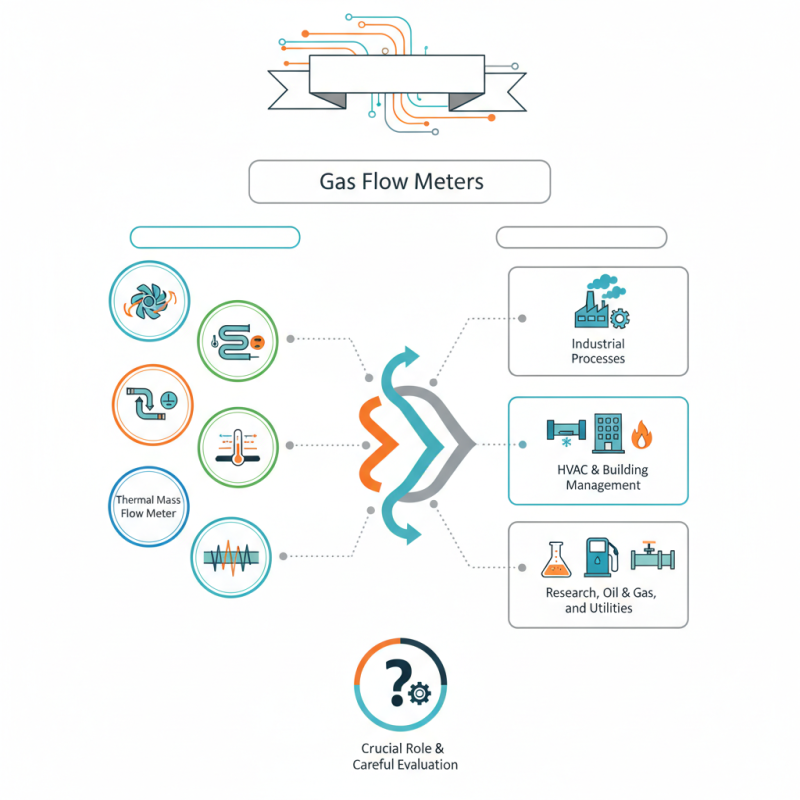
Gas Flow Meters play a crucial role in various industries. Understanding the different types can streamline operations. These devices help measure the flow rate of gases accurately.
Different applications require specific types of Gas Flow Meters. For example, industrial plants often need precise measurements for efficiency. Other sectors, like HVAC, rely on accurate data for system performance. Each type of meter uses unique technology and methods.
In exploring Gas Flow Meters, it’s vital to consider their application. Not all meters fit every need. This requires careful evaluation. Choosing the wrong type can lead to errors. The implications of these mistakes can be costly over time. Thus, understanding these devices is essential for proper application.
Types of Gas Flow Meters: Overview and Classification Criteria
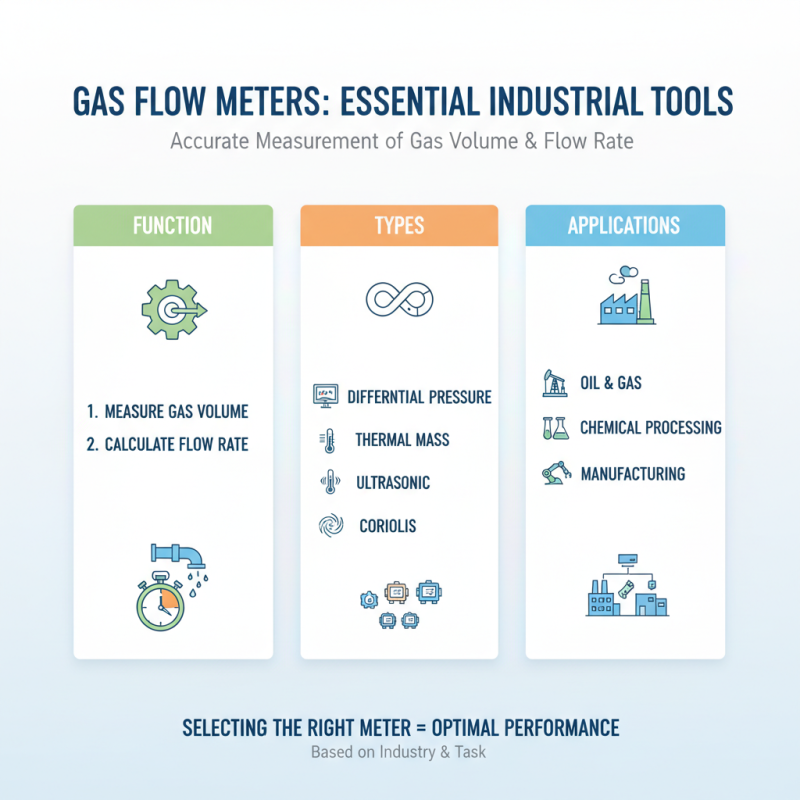
Gas flow meters are essential tools in various industries. They measure gas volume and flow rates with accuracy. Different types come with unique applications and characteristics. Understanding these types helps in selecting the appropriate meter for a specific task.
There are several classifications of gas flow meters. The most common types include volumetric meters, mass flow meters, and inferential flow meters. Volumetric meters calculate flow by measuring the volume of gas passing through. They are widely used in billing and custody transfer scenarios. Mass flow meters, on the other hand, measure the mass of gas directly. They excel in processes that require precise control. Lastly, inferential flow meters assess flow based on pressure and temperature. Their versatility makes them popular in many applications.
Each type has its pros and cons. For instance, volumetric meters may struggle with varying gas densities. This can create inaccuracies. Mass flow meters often need specific calibration for different gases. Finding the best match for your application can be challenging. Reflecting on these factors is crucial for effective gas measurement.
Applications of Coriolis Flow Meters in Various Industries
Coriolis flow meters are widely used in various industries. They measure mass flow and density by detecting changes in oscillation frequency. This technology is valuable in sectors like oil and gas, chemical processing, and food and beverage.
In the oil and gas industry, Coriolis meters provide accurate measurements in challenging environments. They handle complex mixtures, ensuring efficient operations. However, they can be sensitive to temperature changes and vibrations, which might affect readings. Regular calibration is essential to maintain precision.
In the food and beverage sector, these meters ensure product quality and consistency. They enable high-precision measurement, which is crucial for maintaining flavors and textures. Nevertheless, cleaning and maintenance can be time-consuming, and overlooked maintenance might lead to contamination. Industries must weigh these factors against the advantages of using Coriolis flow meters.
Mechanical vs. Electronic Flow Meters: Key Differences Explained
Mechanical and electronic flow meters serve crucial roles in gas measurement applications. Mechanical flow meters use moving parts to measure gas flow. They excel in low-flow scenarios and require minimal power. However, they can wear over time, leading to inaccuracies. Maintenance is often needed to ensure reliable performance.
Electronic flow meters, on the other hand, utilize sensors and digital displays. They provide higher precision and can handle a wide range of flow rates. According to industry reports, electronic meters can improve measurement accuracy by up to 25%. However, they can be more expensive initially and may require software updates for optimization.
Tips: When selecting a flow meter, consider your application’s specifics. Evaluate the environment where the meter will operate. If potential wear is a concern, a mechanical meter might fit your needs better. Conversely, for long-term projects requiring high accuracy, investing in electronic meters can pay off.
Top Gas Flow Meter Types and Their Applications
This chart illustrates the comparison of various gas flow meter types, including Mechanical and Electronic flow meters, and their common applications within different industries.
Accuracy and Calibration Standards for Gas Flow Measurement
Accuracy is crucial in gas flow measurement. Proper calibration ensures that meters provide reliable data. Without it, errors can creep in. These errors can lead to significant discrepancies in operational efficiency.
Calibration standards vary depending on the meter type and application. Some methods rely on comparison with a known standard. Others involve using flow benches or simulators. Each method has its own pros and cons. It is essential to choose the right approach based on specific needs. This can be challenging.
Regular checking of calibration is necessary. Over time, meters may drift from their initial accuracy. Environmental factors can also influence performance. Users should monitor and adjust as needed. This process can seem tedious, but it is vital for maintaining reliability.
Top Gas Flow Meter Types and Their Applications Explained
| Gas Flow Meter Type |
Application |
Accuracy |
Calibration Standard |
| Mass Flow Meter |
Chemical processing, pharmaceuticals |
±0.1% |
ISO 4786 |
| Ultrasonic Flow Meter |
Natural gas distribution |
±0.5% |
API MPMS Chapter 5 |
| Turbine Flow Meter |
Oil and gas extraction |
±0.2% |
API MPMS Chapter 4 |
| Rotary Flow Meter |
HVAC applications |
±1% |
NIST SRM |
| Vortex Flow Meter |
Water and steam measurement |
±0.75% |
API MPMS Chapter 5.5 |
Future Trends in Gas Flow Meter Technology and Applications
The future of gas flow meter technology is rapidly evolving. Experts predict a significant rise in the adoption of digital solutions. According to a recent industry report, the global gas flow meter market is expected to reach $3.3 billion by 2025, growing at a CAGR of 6% from 2020. This growth is driven by the increasing demand for accurate measurement and monitoring.
Wireless technology will play a key role in this evolution. It allows real-time data collection and remote monitoring, reducing the need for manual checks. Enhanced accuracy is crucial in sectors such as oil and gas, where measuring flow rates directly impacts efficiency. However, there is a concern with security. As systems become interconnected, they may become vulnerable to cyber threats.
Tips: When selecting a gas flow meter, consider the application and environmental factors. Accuracy and reliability in various conditions are vital. Also, explore smart metering options for better data management. Adapting to these advancements may pose challenges, but the potential benefits are substantial. Each industry must weigh its needs against available technologies carefully.