How to Choose the Right Magnetic Flow Meter?
Choosing the right Magnetic Flow Meter begins with the process, not the product brochure. Liquid conductivity, pipe size, temperature, pressure, and flow range all influence performance. A meter that works well in clean water may struggle with abrasive slurry or wastewater containing bubbles.
Jesse Yoder, Ph.D., a respected flow-measurement analyst and president of Flow Research, states, “There is no one flowmeter that is best for all applications.” That principle deserves attention. Magnetic flow technology suits conductive liquids because it has no moving parts and creates minimal pressure loss. However, it cannot measure non-conductive fluids, such as many oils or hydrocarbons. Details matter.
A reliable selection also considers electrode material, liner type, grounding, installation conditions, and calibration needs. For example, an empty pipe can produce misleading readings if the meter lacks suitable detection features. Poor grounding can create unstable signals near pumps or variable-frequency drives. These issues often appear after installation, when corrections become expensive.
This guide explains how to compare Magnetic Flow Meter options with practical judgment. It connects technical specifications with real operating conditions, maintenance habits, and long-term costs. The decision is not always straightforward. Some applications remain uncertain until site data is verified. Reviewing conductivity, flow velocity, and piping layout before purchase can prevent avoidable mistakes and improve measurement confidence.
Define the Process Conditions and Measurement Requirements
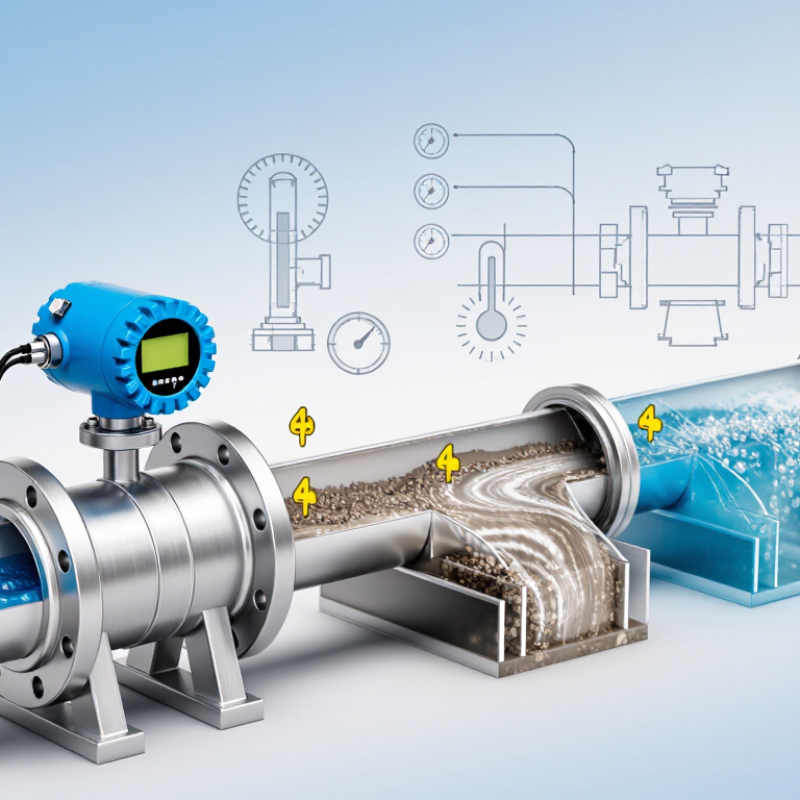
Start with the fluid, not the meter size. A magnetic flow meter requires an electrically conductive liquid. Check the fluid’s conductivity against the meter’s specified minimum, especially when measuring purified water or changing batches. Record the normal, minimum, and peak flow rates. A meter sized only for the peak may struggle to measure low flow accurately.
Document operating temperature and pressure, including short-lived spikes during cleaning or startup. Confirm that the liner and electrode materials suit the fluid’s chemistry and any suspended solids. For example, abrasive slurry may wear components faster, while trapped air can cause unstable readings. Keep the pipe full at the meter location. Small layout details matter.
Set an accuracy target and required turndown range before comparing instruments. Note whether flow is steady, pulsing, or frequently interrupted. Installation space, grounding, and nearby pumps can also affect measurement quality. A straight pipe run may be difficult to provide in a tight plant room; record that limitation rather than assuming the ideal layout. Real process conditions are rarely perfect, and that uncertainty should shape the specification.
Match the Flow Meter Design to the Fluid Properties
How to Choose the Right Magnetic Flow Meter?
Match the Flow Meter Design to the Fluid Properties
A magnetic flow meter works only when the liquid conducts electricity. Water-based process fluids often qualify, while oils and many solvents do not. Check the fluid’s actual conductivity, not just its name. A diluted batch or changing recipe can behave differently from the sample tested during selection. Not always obvious.
Next, match the wetted materials to the fluid’s chemistry and temperature. The liner protects the meter body, while electrodes contact the liquid directly. An aggressive cleaning solution may require different materials from the product flowing through the line. Abrasive slurries can wear a liner, especially when solid particles travel at high speed. Ask about particle size and concentration, not only whether the fluid is called “slurry.”
Flow conditions matter, too. The pipe should remain full; trapped air or a partly filled line can make readings unstable. Bubbles, pulsing flow, and deposits on electrodes may also affect performance. It is easy to focus on pipe diameter and overlook these details. Check operating conditions across the whole process, including startup, cleaning, and batch changes. A small mismatch in the fluid data can become a persistent measurement problem.
How to Choose the Right Magnetic Flow Meter? - Match the Flow Meter Design to the Fluid Properties
| Fluid or Application | Relevant Fluid Properties | Meter Design Considerations | Liner and Electrode Selection | Installation and Selection Notes |
|---|---|---|---|---|
| Clean water and wastewater | Usually conductive; wastewater may contain suspended solids, fibers, or deposits. | A full-bore meter is commonly suitable. Confirm the fluid conductivity meets the meter’s specified minimum. | Choose the liner for the water chemistry and temperature. Stainless steel electrodes are common for compatible services. | Keep the measuring tube full during operation. Consider grounding and electrode coating risks, especially in wastewater. |
| Acids and alkalis | Often conductive, but corrosiveness depends on chemical concentration, temperature, and contaminants. | Select a meter rated for the operating pressure and temperature, with wetted materials compatible with the specific chemical service. | Verify liner and electrode compatibility against chemical concentration and temperature. Material suitability cannot be determined from the chemical name alone. | Check chemical compatibility data and operating limits with the meter supplier before selecting wetted materials. |
| Abrasive slurries | Conductive liquid containing abrasive particles; solids concentration and particle size can affect wear and flow behavior. | Use a design intended for slurry service. Size the meter to maintain enough velocity to limit settling without exceeding acceptable wear or pressure loss. | Select a wear-resistant liner and electrodes appropriate to the slurry chemistry and solids. No single liner material suits every slurry. | Keep the pipe full and follow the installation orientation guidance for the specific application. Account for liner and electrode wear during maintenance planning. |
| Food and beverage liquids | Conductivity varies by product; cleaning cycles may involve hot water, detergents, or sanitizing chemicals. | Choose a hygienic design compatible with the process and cleaning-in-place (CIP) requirements. Confirm the product is sufficiently conductive. | Use wetted materials suitable for the product and cleaning chemicals, and confirm relevant hygienic requirements for the installation. | Check drainability, surface and connection requirements, temperature limits, and whether the meter can withstand the specified CIP conditions. |
| Low-conductivity liquids | Some purified or demineralized liquids may have conductivity below the meter’s operating limit. | Many conventional magnetic flow meters require conductivity above a specified minimum. A value around 5 µS/cm is common for some designs, but limits vary by model. | Electrode and liner selection does not overcome a conductivity limit unless the meter is specifically designed and rated for lower conductivity. | Check the actual minimum conductivity over the full process range. If it is below the meter’s specified limit, evaluate another measurement technology. |
| Oils, hydrocarbons, and gases | Most oils and hydrocarbons are electrically nonconductive; gases do not provide the conductive liquid path required for measurement. | A conventional magnetic flow meter is generally unsuitable for these fluids. | Liner and electrode changes do not make a conventional magnetic meter suitable for a nonconductive fluid or gas. | Consider a measurement technology designed for the fluid, such as a suitable Coriolis, turbine, ultrasonic, or gas flow meter. |
| General installation check | Flow profile, entrained gas, pipe condition, and conductivity can influence measurement performance. | Confirm meter size, flow range, pressure and temperature ratings, and the required accuracy for the application. | All wetted materials must suit the process fluid and cleaning or flushing conditions. | Install with the measuring tube full, provide appropriate grounding, and follow the meter’s instructions for straight-run requirements and orientation. |
Note: Conductivity limits, material compatibility, accuracy, and installation requirements are model-specific. Confirm them using the meter’s technical documentation and the actual process conditions.
Compare Installation Options and Piping Requirements
A magnetic flow meter needs a full pipe, a conductive liquid, and a stable velocity profile. That makes location as important as meter size. ISO 6817 provides a technical basis for electromagnetic flow measurement, while AWWA Manual M33 covers flowmeter use in water systems. In practice, allow about five pipe diameters of straight pipe upstream and two downstream when space permits. These are planning figures, not universal rules: elbows, pumps, valves, and reducers can disturb flow, so check the meter’s installation instructions and the actual piping layout.
Choose between inline and insertion designs based on access and pipe size. An inline meter replaces a pipe section and usually offers better measurement across the pipe, but it needs room for removal and may require a shutdown.
An insertion meter can suit large mains where cutting out a section is difficult. It needs a suitable tapping point, adequate insertion depth, and safe access for maintenance. Keep the sensor away from high points where air may collect, and avoid locations where the pipe can run partially empty. Small details matter.
Before installation, confirm grounding and bonding requirements for the pipe and fluid. A lining, plastic section, or insulating gasket may affect the grounding arrangement. I have seen layouts that looked fine on drawings but left no room for a removal tool; that oversight is easy to miss. Check straight-run needs, full-pipe conditions, and maintenance clearance in the field, not only on paper.
Evaluate Accuracy, Materials, Maintenance, and Total Cost
Choosing a magnetic flow meter starts with the fluid and the measurement job. Check the required accuracy across the full operating range, not only at the normal flow rate. A meter that performs well at steady flow may respond differently during low-flow periods or rapid changes. Compare published accuracy figures with your process conditions, and confirm whether installation requirements affect performance. Straight pipe runs matter. So does a full pipe.
Materials deserve equal attention. The liner and electrodes must suit the fluid’s chemistry, temperature, and suspended solids. For example, abrasive slurry can wear a liner faster than clean water, while aggressive chemicals may damage unsuitable electrode materials. Ask for compatibility data rather than guessing from the fluid’s name. “Wastewater” can describe very different mixtures. That distinction is easy to overlook.
Maintenance and total cost extend beyond the purchase price. Consider access for inspection, cleaning needs, calibration procedures, and the availability of trained service personnel. A meter installed behind piping or above a crowded platform may take longer to maintain. That time has a cost. Estimate energy use, expected service life, replacement parts, and downtime alongside the initial quote. I would still leave room for uncertainty: actual maintenance intervals can differ from the estimate, especially when fluid quality changes. Check the assumptions with operators who know the line, and compare options using the same operating conditions.
Verify Compatibility, Calibration, and Supplier Support
How to Choose the Right Magnetic Flow Meter?
Start with the liquid, not the meter. Electromagnetic flow meters require conductive fluid; check the manufacturer’s minimum conductivity against the process fluid’s actual value. Then match liner and electrode materials to the fluid’s chemistry, temperature, and cleaning routine. A mismatch may look fine during installation and fail after months of exposure. Check pipe size, flow range, pressure, and whether the pipe stays full. ISO 6817 provides guidance on electromagnetic flow-meter performance and testing. Small details matter.
Calibration deserves equal attention. Ask for a traceable calibration certificate showing the test range, results, and measurement uncertainty—not just a pass label. NIST Technical Note 1297 explains how uncertainty is evaluated and reported; a coverage factor of k = 2 often represents roughly 95% confidence under stated assumptions. Check whether the meter’s calibration range covers real operating flows, including low-flow periods. A perfect result at one test point proves little.
Supplier support is part of the instrument’s reliability. Ask who can help configure grounding, empty-pipe detection, and output scaling at your site. Confirm response times, spare-part availability, and whether technicians can review installation photos or trend data. Get the answers in writing. I would also ask how recalibration intervals are chosen; fixed intervals can be convenient, but they may not reflect actual process conditions. That question is easy to overlook.
Related Posts
-
China Top Mag Meter Manufacturers and Suppliers
-
Innovative Solutions for Magnetic Flow Meter Applications Showcased at 2025 China Import and Export Fair
-
How to Choose the Right Mag Meter?
-
Understanding Common Challenges with Magnetic Flow Meters for Global Buyers
-
What is a Magnetic Flow Meter and How Does It Work?
-
Top 10 Magnetic Flow Meters for Accurate Measurement?