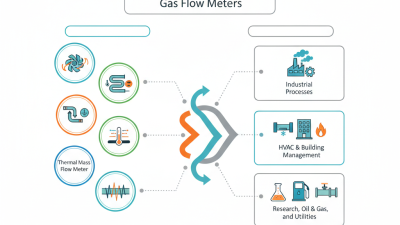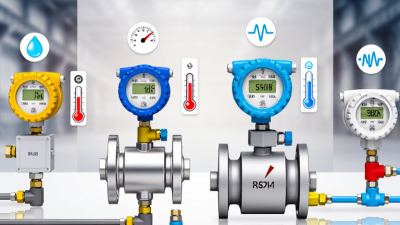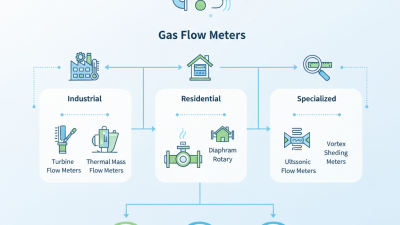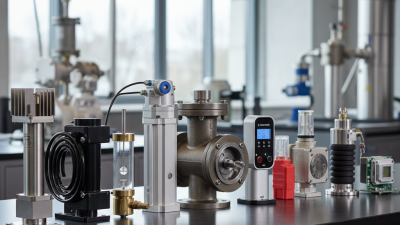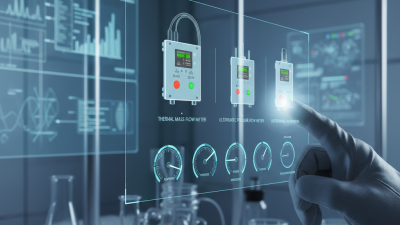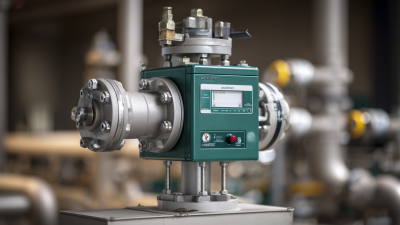
How to Choose the Best Gas Flow Meter?

Choosing the right Gas Flow Meter is not simply a matter of comparing prices, display sizes, or advertised accuracy. The real decision begins with the gas, the pipe, and the operating conditions. Natural gas, compressed air, nitrogen, and biogas can behave very differently inside the same pipeline.

Flow measurement analyst Jesse Yoder has stated, “There is no one flowmeter that is best for all applications.” That principle remains practical. A reliable selection must consider flow range, pressure, temperature, pipe diameter, gas composition, moisture, and required measurement accuracy. It should also examine installation space and maintenance access. A meter that performs well in a clean laboratory may struggle beside a vibrating compressor.

Look closely.

For example, a thermal mass meter may suit clean, stable compressed air systems. A differential-pressure meter may support demanding industrial measurement, but it can require pressure-loss analysis and suitable installation lengths. Ultrasonic models may reduce obstruction inside the pipe, although their performance depends on application conditions and configuration.

This guide compares the main Gas Flow Meter technologies and explains where each option fits. It also considers calibration, communication protocols, total ownership cost, and long-term reliability. These details are easy to overlook during purchasing. I would not claim that one recommendation works everywhere. Field experience often reveals small problems, such as condensation, pulsating flow, or an incorrect gas-density setting. Careful verification is therefore essential before installation. A technically impressive meter can still deliver poor data when the application is misunderstood.
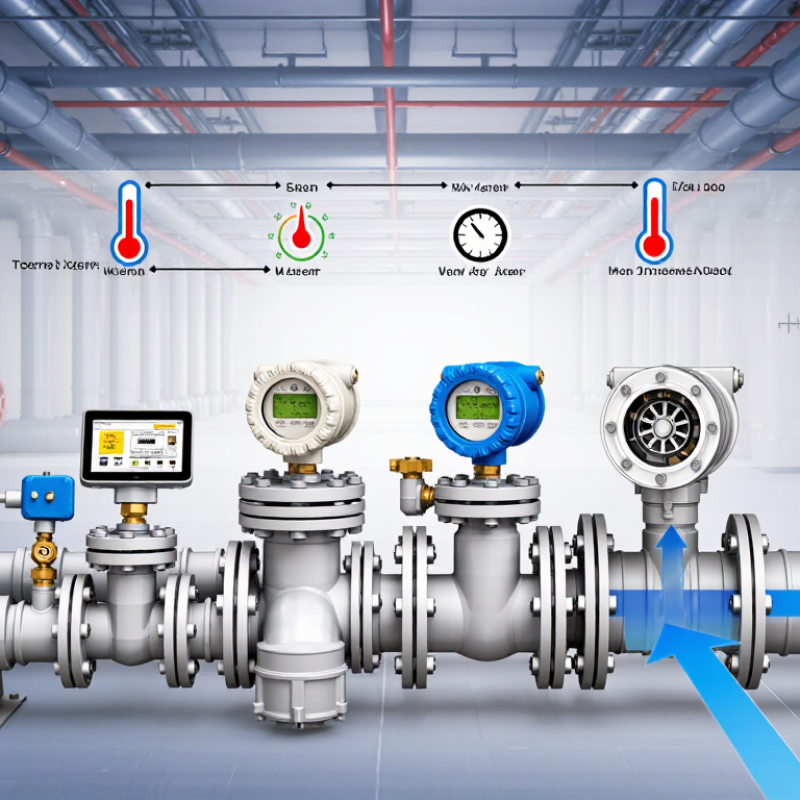
How to Choose the Best Gas Flow Meter?

Define the Gas Measurement Requirements for Your Application

Choosing the best gas flow meter starts with defining your measurement requirements. Identify the gas type, composition, pressure, temperature, flow range, and expected turndown. Moisture, dust, pulsation, and changing density can affect accuracy. Your process may also require mass flow, volumetric flow, or corrected volume under reference conditions.

Scale matters. The U.S. Energy Information Administration reported average U.S. natural gas consumption of about 89.1 billion cubic feet per day in 2023. Even small measurement errors can therefore create significant operating differences. The IEA’s Global Methane Tracker 2024 estimated that fossil fuel operations released roughly 120 million tonnes of methane in 2023, representing about one-third of human-caused methane emissions. This makes reliable measurement important for efficiency, leak detection, and emissions control. Do not select a meter from line size alone. Review accuracy, response time, pressure loss, calibration intervals, and installation conditions. A perfect specification rarely exists.

Tips: Record minimum, normal, and maximum flow rates before contacting a supplier. Check straight-pipe requirements and nearby valves. Confirm the gas composition during startup and normal operation. Field teams often overlook temperature changes. I would also compare lifetime maintenance costs, not only purchase price. The cheapest meter can become expensive when calibration is difficult.

Compare Gas Flow Meter Technologies and Operating Principles

Choosing a gas flow meter starts with understanding how it measures movement, not with its advertised accuracy.

Differential pressure meters create a pressure drop across a restriction, then calculate flow from that difference. They are familiar, durable, and practical for many industrial lines. However, they need stable pressure, suitable piping, and regular checks.

Thermal mass meters measure heat carried away by moving gas. They respond quickly and can report mass flow directly, which helps when temperature changes affect volume. Their weakness is gas composition. A reading may shift when the gas mixture changes.

Turbine meters use a rotating rotor, while ultrasonic meters compare sound travel times across the pipe. Turbine designs can perform well with clean, steady gas. Ultrasonic designs have no moving parts, but installation quality matters greatly.

Coriolis meters measure the twisting force created by moving mass. They offer strong mass-flow accuracy, though their cost and weight may challenge smaller systems.

In field work, I check pressure, temperature, expected flow range, pulsation, and gas cleanliness before comparing specifications. A meter sized for only the normal flow may struggle during start-up. Too large is not ideal either. It can lose resolution at low flow.

No meter is perfect.

I have seen installation errors create larger deviations than the stated instrument tolerance. Straight pipe length, grounding, sensor orientation, and calibration records deserve equal attention.

When gas properties are uncertain, test conditions should be documented and reviewed with a qualified measurement engineer.

Match Meter Specifications to Pressure, Temperature, and Flow Conditions

Choosing the best gas flow meter starts with the operating envelope, not the pipe diameter. Record absolute pressure, gas temperature, minimum flow, normal flow, and maximum flow. Pressure changes gas density, while temperature shifts volume. A meter sized only for average flow may lose accuracy during startup or low-demand periods. It happens often.

For compressible gases, confirm whether the instrument uses pressure and temperature compensation. Ask how it handles compressibility, expressed through the gas factor. ISO 5167 provides calculation guidance for differential-pressure devices, while AGA Report No. 3 addresses orifice measurement in natural-gas service. These references are useful, but they do not replace field verification. Gas composition, moisture, pulsation, and upstream disturbances can still affect results. A clean datasheet can mislead.

Check the meter’s stated accuracy at your actual pressure and flow range. Do not rely on a single laboratory figure. The U.S. Energy Information Administration reports that natural gas consumption varies substantially by sector and season, creating wide operating swings. The IEA’s Global Methane Tracker 2024 also highlights major emissions-reduction opportunities in oil and gas operations, making dependable measurement increasingly important. Choose a meter that supports leak detection, stable control, and traceable calibration. Keep installation conditions visible: straight-run length, valves, filters, and nearby regulators matter. I would also challenge one assumption: higher accuracy is not always better if maintenance access is poor. A practical meter that remains calibrated may outperform a sophisticated meter that operators cannot inspect.

Evaluate Accuracy, Installation Needs, Maintenance, and Total Cost

How to Choose the Best Gas Flow Meter?

Accuracy starts with the gas, not the meter alone. Identify composition, pressure, temperature, density, and expected flow range before comparing specifications. A meter tested with clean, stable gas may perform differently when moisture, dust, or changing pressure enters the line. Check both accuracy and repeatability. They are not identical. In practical inspections, poor sensor placement often causes larger errors than the instrument itself. Allow the required straight pipe length, follow the installation orientation, and prevent condensate from collecting near the sensor.

Installation needs should match the site, not an ideal drawing. Confirm connection size, available space, electrical supply, communication requirements, and area classification. A compact meter can simplify installation, but difficult access may increase future labor. Maintenance access matters. Ask whether filters, seals, or sensing elements need routine cleaning. Review diagnostic functions and calibration requirements before purchase. Some systems require scheduled verification, while others depend more heavily on gas cleanliness and operating conditions. I have seen maintenance plans fail because nobody assigned responsibility for calibration records. That detail seems small.

Total cost includes more than the purchase price. Include installation labor, isolation valves, conditioning equipment, calibration, spare parts, energy consumption, and possible production downtime. Pressure loss deserves careful attention. A low-cost meter that restricts the line can increase compressor demand for years. Request documented test methods, uncertainty data, and service procedures from the supplier. Then compare realistic operating costs over the meter’s expected life. A perfect calculation is unlikely, so record your assumptions and revisit them after several months of operation.

How to Choose the Best Gas Flow Meter? - Evaluate Accuracy, Installation Needs, Maintenance, and Total Cost

Meter Type Typical Accuracy Pressure Loss Typical Installation Requirement Gas and Operating Conditions Maintenance Needs Indicative Initial Cost Estimated 5-Year Total Cost Best-Fit Applications
Thermal Mass Approximately ±1% to ±2% of reading under stable conditions Very low; generally no moving parts or obstruction Usually requires 10–20 pipe diameters upstream and 5–10 downstream; insertion versions need a suitable access fitting Best for clean, dry gases with a known or programmable composition; affected by gas composition and moisture Low; periodic sensor inspection and calibration verification are recommended US$1,000–US$5,000 US$1,500–US$7,000 Compressed-air monitoring, fuel-gas measurement, leak detection, and low-to-medium flow applications
Vortex Approximately ±1% to ±2% of reading for liquids and gases within the specified range Moderate; pressure loss increases with flow velocity and meter size Typically 15–20 pipe diameters upstream and 5 downstream; requires a full pipe and stable flow profile Suitable for clean gases, steam, and some utility services; not ideal for severe vibration or pulsating flow Low to medium; inspect for vibration, verify electronics, and check for fouling where applicable US$1,500–US$6,000 US$2,500–US$8,000 Steam, plant utility gas, compressed air, and general industrial flow measurement
Turbine Approximately ±0.5% to ±1% of reading after proper calibration Moderate to high because of internal rotating components Often requires 10–20 pipe diameters upstream and 5 downstream; installation should minimize swirl and pulsation Best for clean, dry, non-corrosive gases; particulate contamination can affect the rotor and bearings Medium to high; periodic cleaning, bearing inspection, filter maintenance, and recalibration may be required US$1,500–US$7,000 US$3,500–US$12,000 Custody-related utility gas, clean fuel gas, and applications requiring a broad usable range
Ultrasonic Approximately ±0.5% to ±1.5% of reading, depending on design and installation Very low; no significant obstruction in the flow path Usually needs a stable flow profile; straight-run requirements commonly range from 5–20 pipe diameters upstream Works well for clean and moderately dirty gases; performance depends on acoustic conditions, pressure, and gas composition Low; verify signal quality, inspect transducers, and perform periodic diagnostic checks US$3,000–US$12,000 US$4,000–US$15,000 Large pipelines, natural gas distribution, process monitoring, and applications where low pressure loss matters
Coriolis Mass Approximately ±0.1% to ±0.5% of reading, depending on meter size and service Low to moderate; varies by tube design and flow rate Generally has flexible straight-run requirements but needs adequate support and protection from external vibration Excellent for accurate mass measurement; pressure, temperature, phase condition, and gas density must be considered Low to medium; periodic zero verification, diagnostics, and calibration checks are recommended US$5,000–US$20,000 US$6,500–US$25,000 High-value gas dosing, blending, loading, chemical processing, and applications requiring direct mass flow
Differential Pressure Approximately ±1% to ±2% of calibrated span; lower flow accuracy may be limited Moderate to high, depending on primary element and required differential pressure Often requires 10–30 pipe diameters upstream; impulse lines must be correctly installed and protected Suitable for many industrial gases; density compensation is normally needed for accurate mass or standard-volume flow Medium to high; inspect impulse lines, valves, transmitters, and primary-element wear or fouling US$1,500–US$8,000 US$4,000–US$14,000 Existing plants with established instrumentation practices, large lines, and rugged process environments
Cost and selection notes: The cost figures are indicative 2026 budgetary ranges in US dollars for industrial installations and exclude major pipe modifications, hazardous-area certification premiums, flow computers, taxes, and commissioning by third parties. Actual accuracy depends on gas composition, pressure, temperature, flow range, calibration, straight-run conditions, and installation quality. Five-year total cost includes typical purchase, installation, routine maintenance, and calibration allowances, but excludes energy costs caused by pressure loss and production downtime.

Verify Compatibility, Calibration Standards, and Long-Term Reliability

How to Choose the Best Gas Flow Meter?

Choosing a gas flow meter starts with compatibility, not screen size or purchase price. Check the gas composition, expected flow range, pressure, temperature, and line connection. A meter rated for clean air may perform poorly with corrosive, wet, or mixed gases. Pressure and temperature matter.

Review every wetted material. Confirm that seals, tubes, and internal sensors can tolerate the process gas over time. Installation conditions also deserve attention. Straight pipe length, vibration, pulsation, and condensation can distort readings. A practical site check is often more useful than relying on a catalog table alone. Small details cause large errors.

Calibration should follow a recognized quality system, preferably with traceability to national or international measurement standards. Ask for the calibration range, uncertainty, test gas, and calibration date. A certificate without these details is not enough. The meter should be tested near its actual operating points, not only at one convenient value. This step is sometimes skipped when projects run late.

Long-term reliability depends on drift control and service access. Look for clear maintenance intervals, replaceable filters, stable software, and a record of calibration history. Data logging can reveal gradual changes before they become costly. No meter stays perfect forever. Even a well-specified instrument may need recalibration after vibration, contamination, or repeated thermal cycling. It is easy to overestimate reliability when the first readings look stable. Build a verification plan, and leave room to revise it when field evidence disagrees.

How to Choose the Best Gas Flow Meter?

Compare measurement technologies by compatibility, calibration requirements, and long-term reliability. The scores below are indicative engineering ratings on a 1–5 scale; verify the final selection against the actual gas composition, pressure, temperature, flow range, and installation conditions.

Selection guidance: Confirm wetted-material compatibility first, use calibration services accredited to ISO/IEC 17025 where traceability is required, and review pressure drop, contamination sensitivity, moving parts, maintenance needs, and recalibration intervals before purchase.