Discover the Best Non Contact Flow Meter Solutions for Buyers
In today's industrial landscape, Non Contact Flow Meters have gained significant traction. According to a report by Research and Markets, the global flow meter market is projected to reach $8.5 billion by 2027, with non-contact technologies playing a central role. This surge highlights the growing demand for innovative measurement solutions that enhance operational efficiency.
Non Contact Flow Meters offer distinct advantages over traditional devices. They minimize wear and tear due to the absence of moving parts. Moreover, they reduce the risk of contamination, making them ideal for sensitive applications such as food and pharmaceuticals. However, choosing the right solution can be challenging. Many buyers overlook crucial specifications that can impact performance.
It's essential to understand that while Non Contact Flow Meters present numerous benefits, they also come with challenges. For instance, some models may struggle with certain fluid types or environmental conditions. Evaluating these limitations is vital for informed decision-making. By considering both strengths and weaknesses, buyers can navigate the complexities of selecting the best non-contact solutions for their needs.
Understanding Non-Contact Flow Meters: Principles and Operation
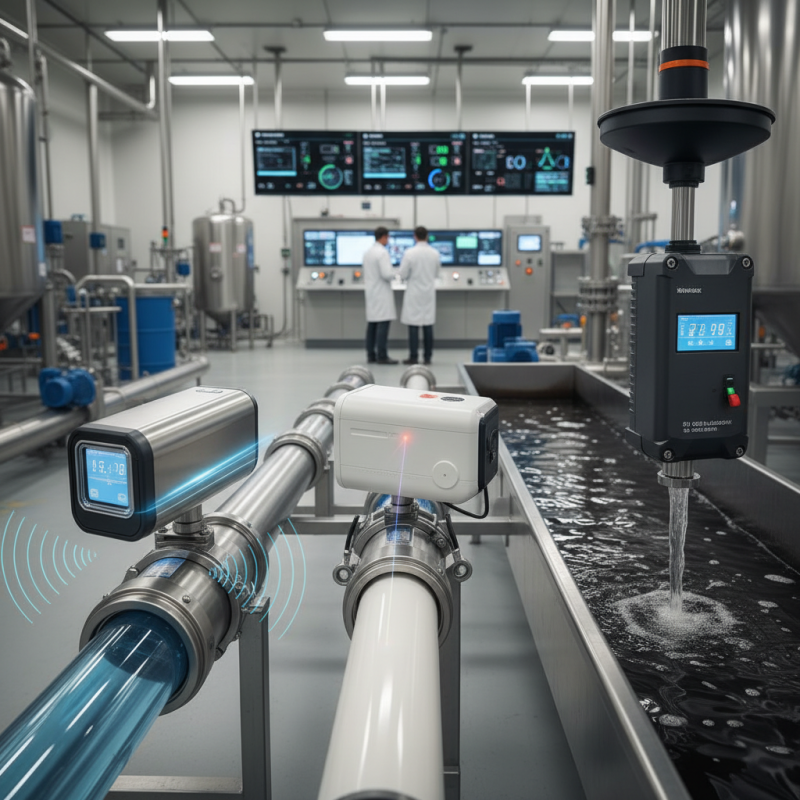
Non-contact flow meters offer innovative solutions for measuring fluid dynamics without direct interaction. They can utilize various principles, such as ultrasonic or electromagnetic technology. These principles allow accurate measurements in applications where physical contact is impractical or impossible.
Understanding the operational mechanics of non-contact flow meters is crucial. Ultrasonic flow meters, for example, emit high-frequency sound waves. These waves reflect off the fluid and return to the sensor. The time it takes for this reflection helps determine flow rate. Electromagnetic meters, on the other hand, rely on Faraday's law. When conductive fluids pass through a magnetic field, they generate a voltage proportional to flow speed.
While non-contact flow meters provide significant benefits, they come with challenges too. Environmental factors such as temperature and pressure can affect measurements. Users must be aware of these variables when selecting a flow meter. Regular calibration is essential to maintain accuracy over time. It's vital to deeply understand the application and its requirements before investing in flow measurement technology.
Non-Contact Flow Meter Solutions: Performance Comparison
This chart illustrates the measurement accuracy of various non-contact flow meter solutions. Ultrasonic flow meters provide the highest accuracy, followed by laser, magnetic, and capacitive types. Understanding these metrics is vital for buyers making informed purchase decisions.
Key Benefits of Non-Contact Flow Meters in Various Industries
Non-contact flow meters revolutionize measurement in various industries. Their design eliminates wear and tear, leading to enhanced longevity. These meters use advanced technology like ultrasonic or laser, ensuring accurate flow measurement without direct contact. This benefit is crucial for applications involving corrosive materials, as it vastly reduces maintenance needs.
In the food and beverage sector, non-contact flow meters uphold hygiene standards. They prevent contamination during measurement, which is essential for compliance with health regulations. Moreover, in the oil and gas industry, they can measure large volumes without disrupting flow, an advantage that contributes to operational efficiency.
**Tip:** Consider the environment when selecting a flow meter. Factors like temperature, pressure, and medium type can affect performance. Always consult technical experts to choose the right model for your needs.
When adopting new technologies, slight discrepancies might occur. Understanding how these devices operate can enhance accuracy. Regular calibration and maintenance are recommended to mitigate possible inaccuracies over time.
**Tip:** Ensure all operators are well trained. Knowledgeable users can recognize signs of potential issues before they escalate. This proactive approach saves time and costs.
Discover the Best Non Contact Flow Meter Solutions for Buyers - Key Benefits of Non-Contact Flow Meters in Various Industries
| Industry |
Flow Meter Type |
Measurement Range |
Key Benefits |
Typical Applications |
| Water Treatment |
Ultrasonic Flow Meter |
0.1 - 10 m/s |
Non-invasive, no pressure loss |
Water supply monitoring, leakage detection |
| Oil & Gas |
Electromagnetic Flow Meter |
0.5 - 7 m/s |
High accuracy, reliable in harsh conditions |
Pipeline monitoring, custody transfer |
| Food & Beverage |
Coriolis Flow Meter |
1 - 12 m/s |
Accurate measurement of density and composition |
Beverage production, dairy processing |
| Pharmaceutical |
Laser Doppler Flow Meter |
0 - 5 m/s |
Non-invasive, minimal contamination risk |
Drug formulation, quality control |
| HVAC |
Venturi Flow Meter |
0.05 - 10 m/s |
Compact design, low maintenance |
Energy monitoring, system balancing |
Comparative Analysis of Leading Non-Contact Flow Meter Technologies
Non-contact flow meters have gained recognition for their ability to measure the flow of liquids and gases without direct contact. This technology is essential for applications where contamination is a concern. Various technologies exist, each with unique advantages and limitations. A detailed comparative analysis reveals the intricacies of these options.
Ultrasonic flow meters utilize sound waves to gauge flow rates. They are accurate and suitable for a wide range of applications. However, factors like temperature and liquid composition can affect performance. Laser-based flow meters offer high precision and work well in challenging environments. Yet, they can be costly and require careful calibration.
Electromagnetic flow meters utilize the principle of electromagnetic induction. These are reliable for conductive fluids but not ideal for non-conductive substances. Users must consider specific requirements and conduct thorough evaluations. Each technology offers distinct benefits, but also presents challenges that demand thoughtful consideration. Understanding these nuances aids buyers in making informed decisions.
Market Trends and Growth Projections for Non-Contact Flow Meters
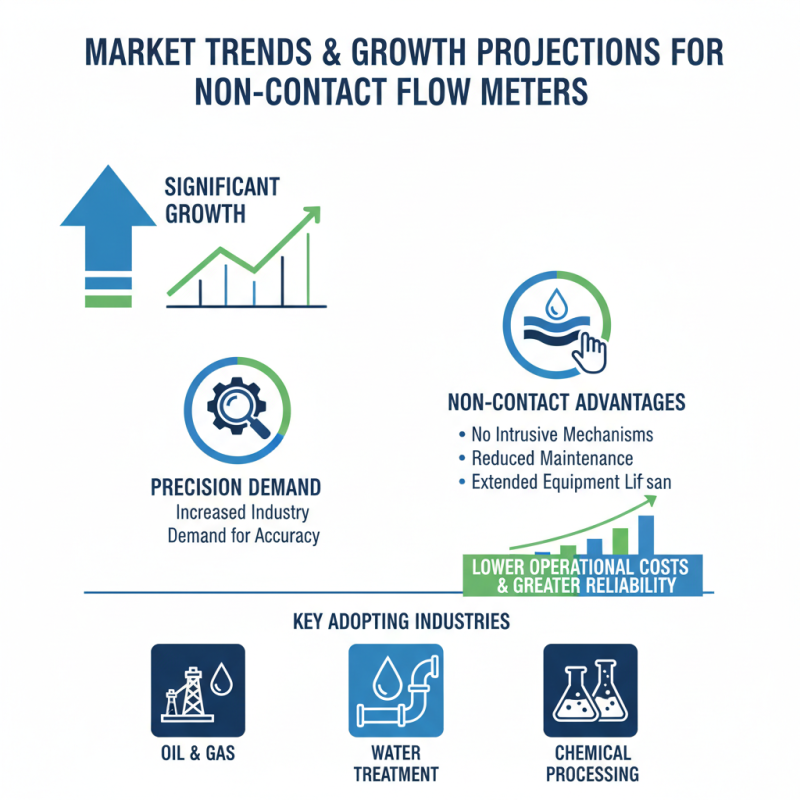
The non-contact flow meter market is experiencing significant growth. Increased demand for precision in various industries drives this trend. Non-contact technologies offer numerous advantages. They measure flow rates without intrusive mechanisms, leading to fewer maintenance issues. This reliability appeals to sectors such as oil and gas, water treatment, and chemical processing. Users appreciate the reduced wear on equipment, contributing to longer lifespan and lower costs.
Market projections indicate a shift toward digital solutions. Modern flow meters now incorporate advanced sensors and smart features. These innovations enhance measurement accuracy and provide real-time data. Buyers are increasingly interested in metrics that improve performance. Yet, some may feel overwhelmed by the number of available options. It becomes crucial for buyers to evaluate their specific needs carefully. Finding the right solution requires time and research to avoid costly mistakes.
Sustainability concerns also influence market dynamics. Companies are seeking solutions that minimize environmental impact. Non-contact meters often align well with these goals by reducing waste. However, buyers must remain vigilant. Not all non-contact solutions are equally effective or reliable. Understanding the technology's limitations is vital, ensuring that the chosen meter meets operational demands. This reflection on both advancements and challenges is essential for informed purchasing decisions.
Evaluation of Performance Standards and Accuracy in Non-Contact Flow Meters
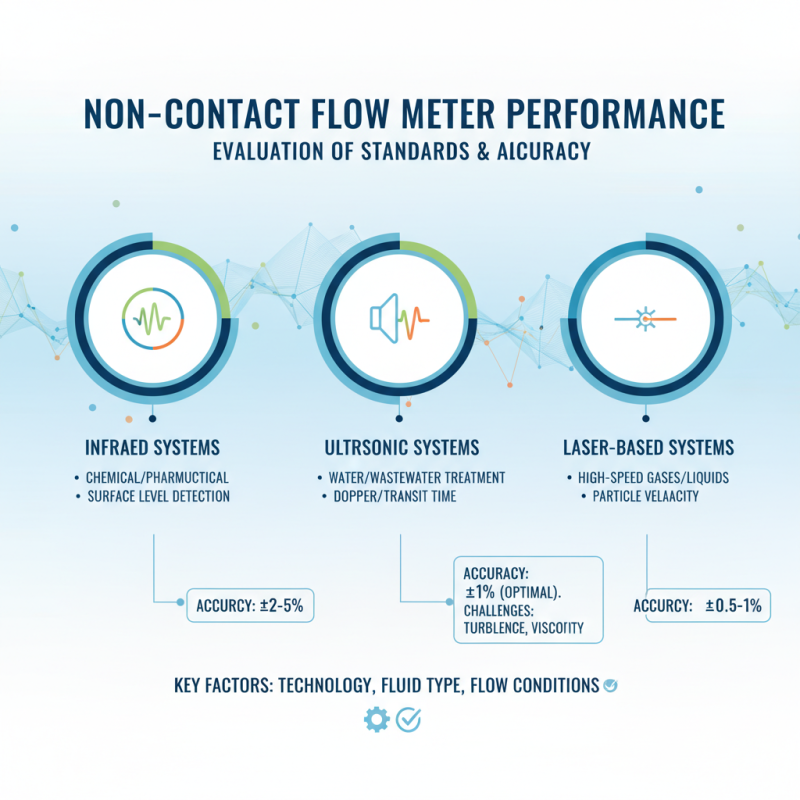
Non-contact flow meters have revolutionized fluid measurement in various industries. Their performance largely relies on the technology they use. Infrared, ultrasonic, and laser-based systems each have unique advantages and limitations. For instance, ultrasonic meters can achieve an accuracy of ±1% under optimal conditions, yet they may struggle with turbulent flows or highly viscous fluids.
A recent industry report highlighted that effective calibration procedures are crucial for enhancing accuracy. Regular maintenance can improve the reliability of readings. It is estimated that improper installation can lead to errors exceeding 10% in flow measurement. This emphasizes the importance of proper setup and regular assessment.
**Tips:** Always consider environmental factors like temperature and pressure. These variables can significantly influence meter performance. Additionally, ensure that you choose a system that aligns with your fluid type. Not all non-contact solutions are suitable for every application. Continuous learning about these technologies can lead to better purchasing decisions and improved operational efficiency.